Government procurement has become one of the most reliable ways for businesses to achieve long-term growth. With the expansion of digital procurement platforms, suppliers now have access to thousands of tender opportunities from central ministries, state governments, public sector undertakings (PSUs), municipal corporations, and educational institutions. However, winning contracts requires much more than submitting a quotation.
Successful bidders understand the Bidding Process in GeM, work with experienced consultants, invest in professional training, and follow a structured bidding strategy. Businesses that build these capabilities consistently improve their chances of securing government projects while reducing costly mistakes during procurement.
This guide explains how expert consultancy, structured training, and a professional bidding approach help businesses compete successfully in today's government procurement environment.
Understanding the Bidding Process in GeM
The Government e-Marketplace (GeM) has simplified public procurement by providing a transparent digital platform where government buyers and registered sellers can interact securely. Every procurement opportunity follows a defined Bidding Process in GeM, ensuring fairness and equal participation for eligible suppliers.
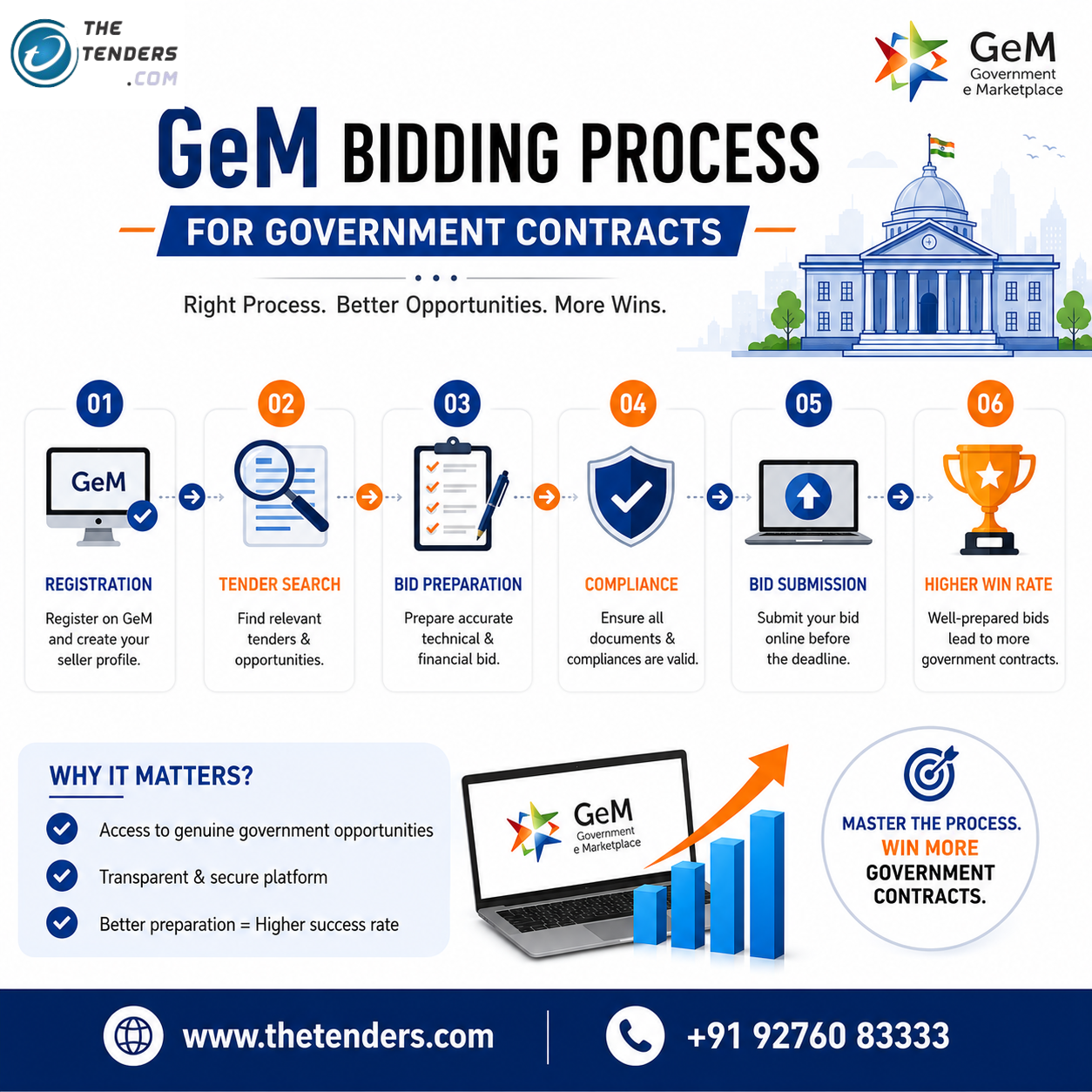
A typical bidding journey includes:
Vendor registration and profile verification
Searching for relevant tender opportunities
Reviewing eligibility criteria
Preparing technical documents
Preparing commercial quotations
Uploading bid documents
Online bid submission
Technical evaluation
Financial evaluation
Contract award
Understanding each stage helps businesses avoid common errors while improving submission quality.
Why Businesses Need a GeM Tender Consultant
Government procurement involves detailed documentation, compliance requirements, and strict timelines. A professional GeM Tender Consultant provides expert guidance throughout the procurement lifecycle.
Consultants support businesses by:
Identifying suitable procurement opportunities
Reviewing eligibility requirements
Preparing technical documentation
Verifying compliance before submission
Advising on bid strategy
Assisting with online submissions
Instead of navigating procurement requirements alone, businesses benefit from experienced professionals who understand government purchasing procedures.
The Strategic Role of a GeM Bidding Consultant
While many businesses can prepare documents internally, developing a competitive proposal often requires specialized expertise. A qualified GeM Bidding Consultant focuses on strengthening bid quality while ensuring every submission aligns with procurement requirements.
Professional consultancy typically includes:
Bid Planning
Consultants evaluate tender documents and determine the most effective bidding strategy.
Documentation Review
Every required certificate, declaration, technical specification, and commercial document is reviewed carefully before submission.
Risk Assessment
Potential compliance issues are identified early to reduce the possibility of bid rejection.
Submission Guidance
Consultants ensure bids are submitted accurately and within the specified deadlines.
Working with a GeM Bidding Consultant allows businesses to improve efficiency while reducing procurement risks.
Why Businesses Choose a Tender Bidding Service Provider
Preparing government tenders requires significant time and resources. Rather than creating a large in-house procurement department, many organizations choose an experienced Tender bidding service provider to manage the bidding process.
Professional service providers generally offer:
Tender opportunity monitoring
Eligibility verification
Bid documentation
Technical proposal preparation
Commercial quotation support
Submission management
Compliance assistance
This approach enables businesses to focus on production, project execution, and customer service while procurement specialists handle complex bidding activities.
Breaking Down the Tender Bidding Process
A structured Tender bidding process is essential for every successful government bid. Following a systematic approach reduces errors and improves overall bid quality.
Step 1: Opportunity Selection
Evaluate whether the tender matches your products, services, experience, and business capabilities.
Step 2: Requirement Analysis
Review technical specifications, financial conditions, eligibility criteria, and submission instructions.
Step 3: Document Preparation
Compile statutory documents, financial statements, technical credentials, declarations, and supporting certificates.
Step 4: Proposal Development
Prepare technical and commercial bids according to the tender requirements.
Step 5: Submission
Upload all required documents before the deadline while ensuring compliance with procurement guidelines.
Step 6: Evaluation
Government buyers assess technical qualifications, financial proposals, and overall compliance before awarding contracts.
Businesses that consistently follow a disciplined Tender bidding process are more likely to submit accurate and competitive bids.
Why Tender Bidding Training Builds Long-Term Success
Government procurement regulations continue to evolve, making continuous learning an important investment. Tender Bidding Training equips procurement teams with practical knowledge that improves both confidence and performance.
Training programs commonly cover:
Government procurement policies
Tender document interpretation
Technical bid preparation
Commercial quotation development
Compliance management
Online submission procedures
Bid evaluation methods
Organizations with trained procurement professionals often experience fewer documentation errors and greater bidding efficiency.
Benefits of Combining Consultancy and Training
Many successful companies combine professional consultancy with internal skill development. This approach creates both immediate and long-term advantages.
The combination of a GeM Tender Consultant, an experienced GeM Bidding Consultant, a trusted Tender bidding service provider, and comprehensive Tender Bidding Training enables businesses to:
Improve bid accuracy
Reduce compliance risks
Increase submission efficiency
Strengthen internal procurement capabilities
Respond quickly to new government opportunities
Instead of depending entirely on external support, organizations gradually build knowledgeable procurement teams while continuing to benefit from expert guidance.
Common Mistakes That Reduce Tender Success
Many businesses fail to win government contracts because they:
Misunderstand tender requirements
Submit incomplete documentation
Ignore compliance conditions
Delay bid preparation
Miss submission deadlines
Lack procurement knowledge
Most of these challenges can be prevented by understanding the Bidding Process in GeM, following a structured Tender bidding process, and investing in professional support and training.
Future-Proofing Your Government Tender Strategy
Government procurement is becoming increasingly technology-driven. Businesses that continuously improve their bidding knowledge and adapt to changing procurement practices will remain more competitive.
Developing internal expertise through Tender Bidding Training while leveraging professional consultancy allows organizations to participate confidently in future procurement opportunities across multiple government departments.
Conclusion
Success in government procurement requires planning, expertise, and continuous improvement. Businesses that understand the Bidding Process in GeM, seek guidance from an experienced GeM Tenders Consultant, work with a knowledgeable GeM Bidding Consultant, partner with a trusted Tender bidding service provider, follow a structured Tender bidding process, and invest in Tender Bidding Training build a strong competitive advantage.
By combining professional consultancy, practical training, and disciplined bid management, organizations can improve submission quality, reduce procurement risks, and increase their chances of winning valuable government contracts in India's growing public procurement market.